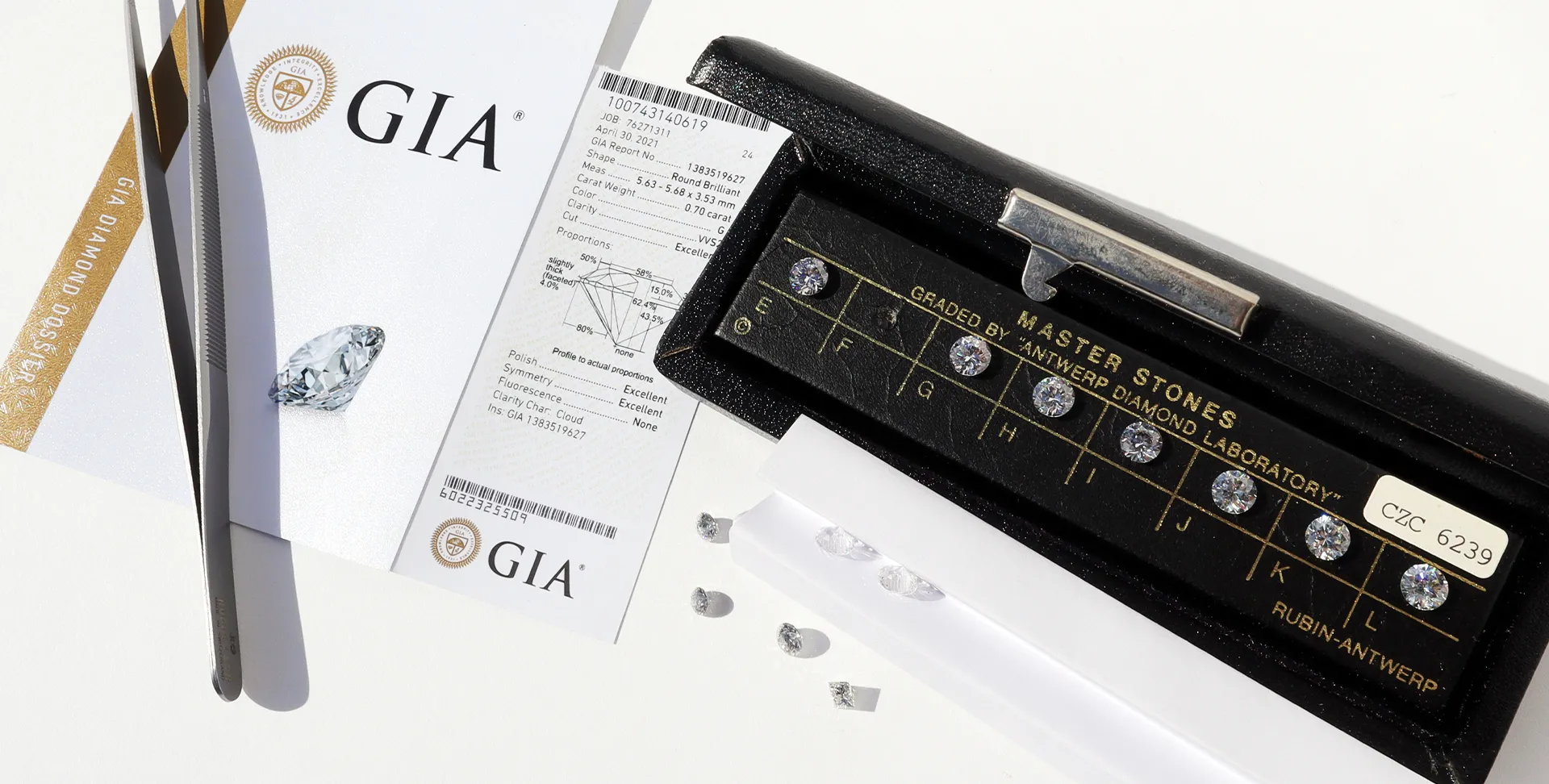
What is a GIA certified diamond?
Learn how a GIA report helps confirm a diamond’s quality, authenticity, and value before you buy
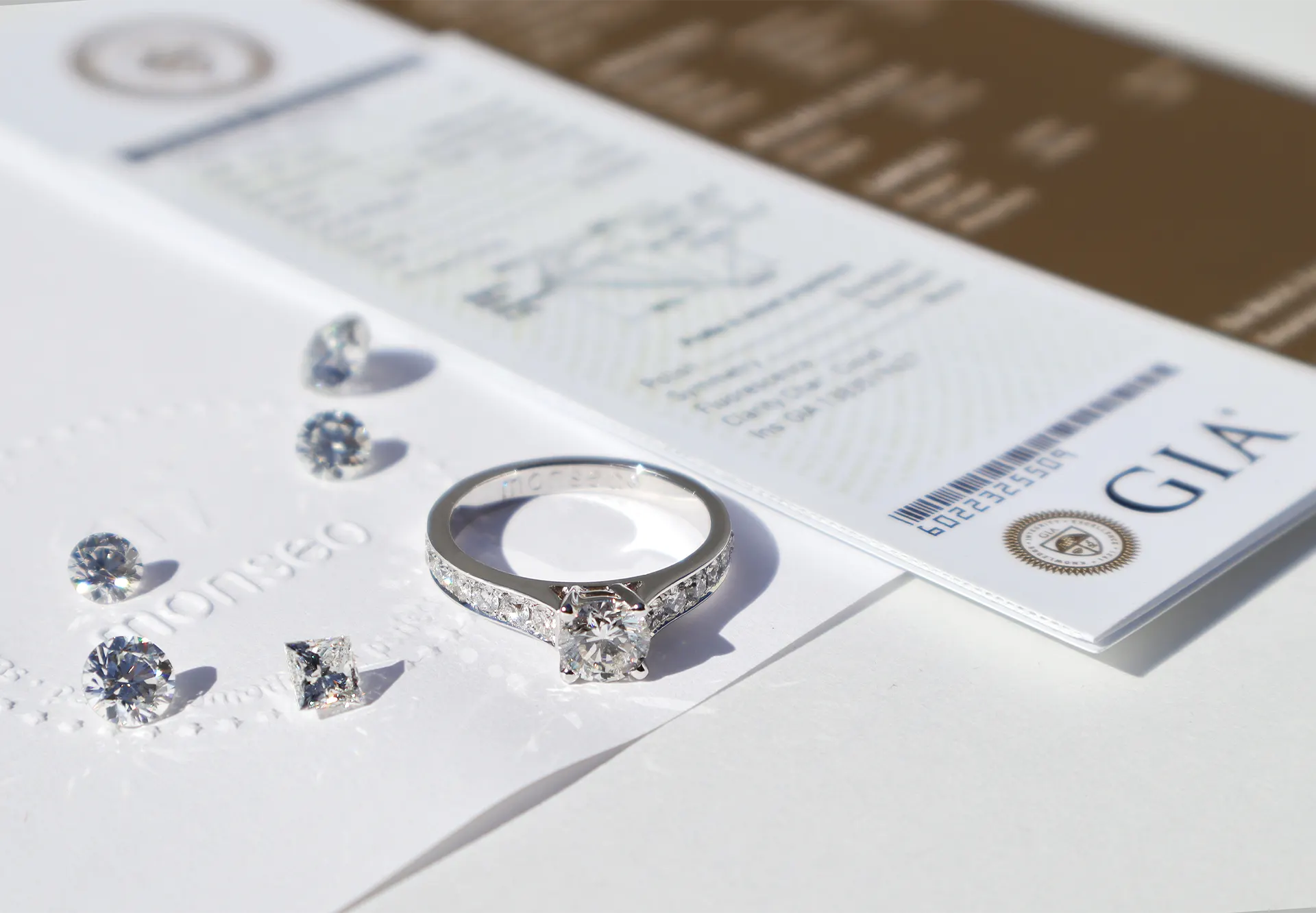
First of all, it is important to clarify that the phrase “GIA-certified diamond” is widely used by consumers, but it is not the most accurate term from a technical standpoint.
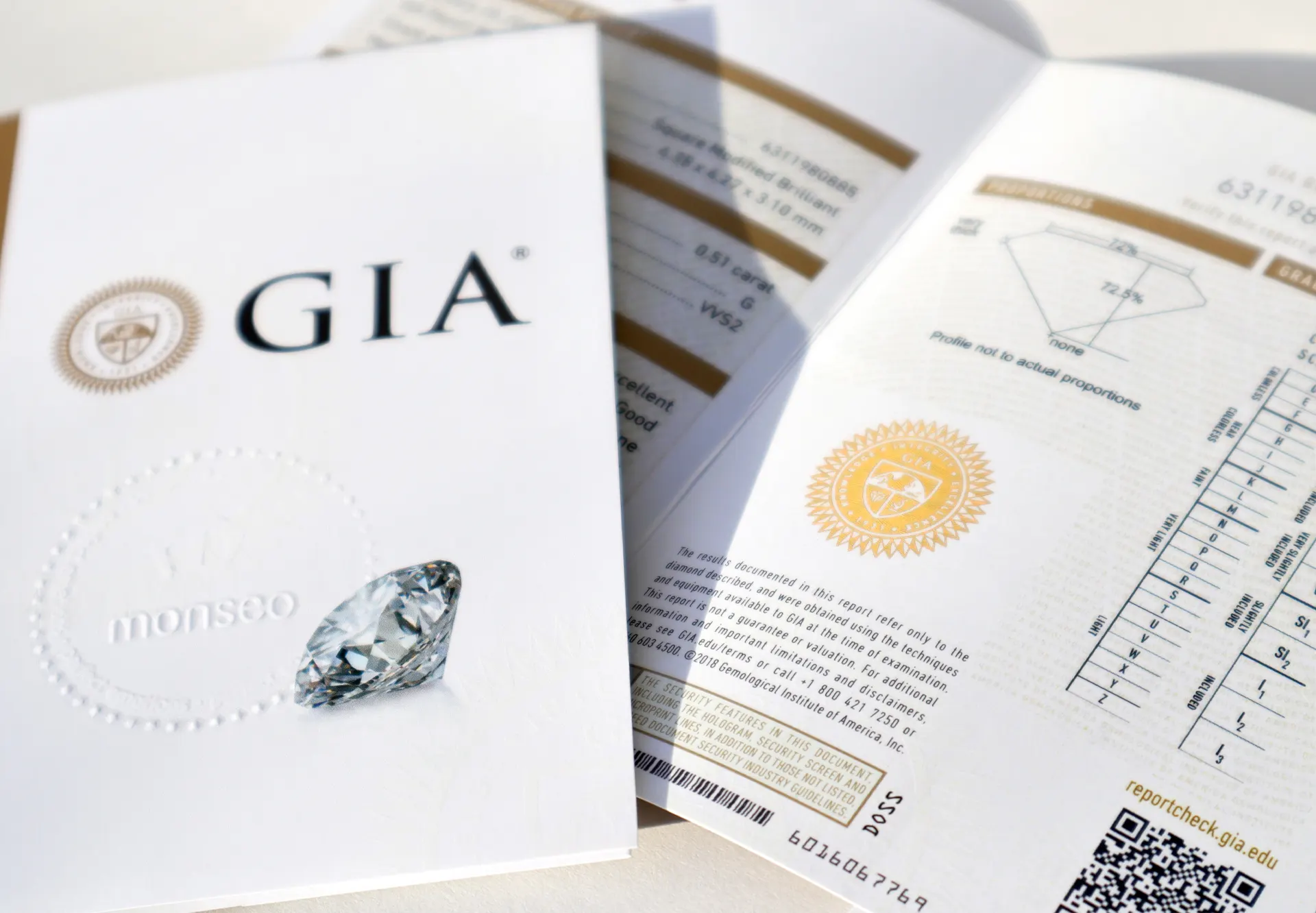
The GIA does not “certify” diamonds. The GIA analyzes, grades, and issues a GIA Report, which describes the diamond’s key characteristics, such as weight, color, clarity, cut, proportions, and fluorescence.
At Monseo, we use the correct term—GIA Report—both internally and in our technical descriptions. However, in this article, we will also use the phrase “GIA-certified,” because it is the most widely recognized term and the one most frequently searched by consumers when looking for information about diamonds with GIA analysis.
Therefore, whenever we refer to a “GIA-certified diamond” in this article, we are referring to a diamond accompanied by a GIA Report—an independent document that describes the diamond’s technical characteristics and allows its quality to be verified with greater accuracy and transparency.
When choosing a piece of diamond jewelry—especially an engagement ring or a piece of fine jewelry—knowing exactly what you’re buying is essential. Having these reports with your jewelry allows you to understand the diamond’s quality based on scientific and independent criteria.
At Monseo, our selection of diamonds accompanied by these reports reflects our commitment to quality, transparency, and trust.
What does GIA stand for?
GIA stands for Gemological Institute of America. It is a world-renowned institution specializing in the analysis, grading, and certification of diamonds and other gemstones.
The GIA is particularly well known for developing the 4Cs system, which is used internationally to determine the quality of any diamond, anywhere in the world—Color, Clarity, Cut, and Carat Weight.
When a diamond comes with a GIA report, it means that it has been analyzed and graded by independent experts, and its characteristics have been recorded in a single report.
Why is it important to buy a diamond accompanied by a GIA Report—often referred to commercially as a “GIA certificate”?
Buying a diamond accompanied by a report is important because it ensures greater transparency. This report allows you to know exactly what kind of stone you are purchasing, avoiding subjective or unclear assessments.
A gemological report provides information such as carat weight, color, clarity, cut, proportions, and other relevant characteristics of the diamond.
This is particularly important for higher-value jewelry, such as engagement rings, solitaire rings, earrings, necklaces, and fine jewelry pieces.
What are the 4Cs of diamonds?
The 4Cs are the four main criteria used to evaluate the quality of a diamond.
Cut
The cut is the factor that determines how a diamond interacts with light. Well-executed proportions, symmetry, and polish maximize a diamond’s brilliance, fire, and sparkle—the visual effects that make a diamond luminous, vibrant, and exceptional.
More than just the stone’s shape, cut is the art of revealing a diamond’s light. It is what transforms technical quality into brilliance, fire, and splendor. Therefore, when choosing a diamond, the cut is essential to its final beauty.
A larger diamond with a poor cut may appear less brilliant than a smaller diamond with an excellent cut.
Color (in colorless diamonds).
Color assesses the degree of tint in a diamond. In general, the most highly valued diamonds are those closest to colorless.
Even small differences in color can influence the stone’s value and appearance, especially when viewed alongside other diamonds.
Clarity
Clarity examines and measures the presence of internal inclusions or small external blemishes. These characteristics are natural and result from the diamond’s formation process.
The fewer visible inclusions, the rarer and more valuable the diamond tends to be.
Carat
The carat is the unit of weight for diamonds. Although many people associate carats with size, weight should not be the only criterion for choosing a diamond.
A diamond that strikes a balance between color, clarity, cut, and weight may be more desirable than a heavier stone with lower overall quality.
Does a GIA report commercially known as a GIA certificate, guarantee that a diamond is genuine?
The GIA report identifies and classifies the diamond’s characteristics. The report helps confirm the stone’s authenticity and quality, giving the buyer an objective basis for their decision. However, it is important to always buy from a reputable jeweler who knows how to interpret the report and explain the item’s true value.
Do all diamonds need a certificate?
Not all diamonds are required to have a report, especially when it comes to very small stones. However, for larger or more valuable diamonds, it is highly recommended. It is particularly important for engagement rings, solitaire rings, and jewelry featuring a prominent center stone, as it also allows you to determine whether the diamond is natural or lab-grown.
What is the difference between a diamond accompanied by a GIA certificate and one that is uncertified?
The main difference lies in the reliability of the information. A certified diamond has its characteristics analyzed and documented by an independent entity.
For a diamond without a report, the evaluation may rely solely on the information provided by the seller. This does not necessarily mean the stone is of poor quality, but it makes the purchase less transparent.
Having the report allows you to compare diamonds with greater confidence and better understand the relationship between quality, rarity, and price.
How to Choose a Certified Diamond?
Choosing a diamond requires balancing technical evaluation with personal preference: understanding the 4Cs, comparing options, requesting an independent GIA report, and examining the stone under different lighting conditions before making a final decision.
In an engagement ring, for example, brilliance and visual presence can be especially important.
You should also take the jewelry’s design into account. A diamond can look different depending on the type of setting, the metal chosen, and the lighting.
Expert guidance is essential for evaluating and selecting a stone that combines quality, beauty, and value.
Certified Diamonds in Luxury Jewelry
In luxury jewelry, a diamond is more than just a gemstone. It embodies brilliance, precision, rarity, and emotion. Certification reinforces confidence in your choice and enhances the piece’s value over time.
A piece of jewelry featuring certified diamonds can be the perfect way to mark a special moment, celebrate a relationship, or invest in a timeless piece.
Frequently Asked Questions About Diamonds Accompanied by a GIA Report, Often Referred to Commercially as a “GIA Certificate.”
What is a “GIA Certificate”?
It is a gemological report issued by the Gemological Institute of America that grades and describes the characteristics of a natural or lab-grown diamond.
Is a “GIA-certified” diamond better?
The fact that a diamond is accompanied by a GIA report does not make the diamond better in and of itself, but it independently confirms its characteristics. This allows for a safer and more informed purchase.
Does a “GIA certificate” indicate the diamond’s value?
No. The GIA prefers and advocates the term “report” because it considers the document to be a technical and scientific evaluation, not a certification or a commercial guarantee. The GIA also states that it is incorrect to use the terms “GIA Certified Diamonds” or “GIA Certified,” as this may imply that the GIA endorses, sponsors, or guarantees a stone, a company, a price, or a service. It does not assign a monetary value to the diamond.
Value also depends on the market, the jewelry, the design, and other factors
Is it worth buying an engagement ring with a “certified diamond”?
Yes, especially when the ring has a higher-value center stone. Certification provides confidence, transparency, and detailed information about the diamond.
How can you tell if a “GIA certificate” is genuine?
The report has a unique identification number that can be verified with the issuing authority. Currently, the report number is laser-engraved on the diamond.
The jeweler should also help you confirm and interpret the information.
Choose diamonds with confidence at Monseo
At Monseo, every piece of jewelry is designed with precision, elegance, and attention to detail. Discover natural diamonds accompanied by a GIA Report whenever applicable, engagement rings, and exclusive pieces created to celebrate unique moments with brilliance, confidence, and sophistication. We value authenticity, rarity, beauty, and emotional significance.

